

Case Study: HG-4 High-Density Microclimate Mapping
Platform
HG-4 microclimate mesh node
The Challenge: Infrastructure in Tight Spaces
The site needed shelf-level microclimate truth across the whole operation, not a handful of room averages. Conventional layouts assume open space and forgiving RF. This building offered neither: racks were packed tight, and metal-heavy shelving worked against simple Wi-Fi sensor grids.
Tight rack aisles and truss geometry left almost no room for typical sensor housings, cable runs, and gateway placement.
Layered metal shelving behaves like a partial Faraday cage, so point-to-point Wi-Fi alone could not support dense, shelf-by-shelf coverage.
Approach
From room averages to shelf-level truth
We engineered the HG-4 as a compact, mesh-capable node and deployed 70 units across the site. The program replaced coarse room-level readings with repeatable, shelf-level microclimate data without asking the customer to tear out their racking.
1. Dual-Path Connectivity: Mesh & PoE/Wi-Fi
To solve the connectivity gap, we developed a hybrid communication stack that adapts to the farm’s specific infrastructure. Self-Healing Mesh System: In areas with poor Wi-Fi penetration, the 70 nodes form a robust mesh network. Each node acts as a repeater, allowing data to "hop" around metal obstructions to the nearest gateway. PoE & Wi-Fi Options: For facility sections with existing conduit, the HG-4 supports Power over Ethernet (PoE) for high-reliability data and power. In more flexible "truss" zones, it utilizes industrial Wi-Fi with optimized antenna tuning. Battery-Powered Wi-Fi Models: Many rack and truss locations had no wired power path. Those Wi-Fi deployments were specified for long battery life: a 5-year design target at the agreed sampling and uplink duty cycle, with sleep budgeting and component selection so the fleet did not become a constant field battery-swap program.
2. Microclimate Fusion at the Edge
Traditional sensors are too bulky for vertical racks. We consolidated four grow-critical parameters into a single low-profile assembly: Integrated Sensing: CO₂, Lux (Light), Temperature, and Humidity. Synchronized Telemetry: By sampling all four parameters on a single MCU clock, we eliminated "timestamp skew," allowing agronomists to see exactly how a light-cycle change impacts CO₂ uptake and transpiration in real-time.
3. Rapid Deployment & Provisioning
Installing 70 devices can be a logistical bottleneck. We developed a custom deployment playbook to streamline the rollout: Plug-and-Play Provisioning: Automated "handshake" protocols allow new nodes to join the mesh network instantly upon power-up. Serviceable Mounting: Custom bracketry designed specifically for vertical farm trusses, allowing for "one-hand" installation in tight spaces.
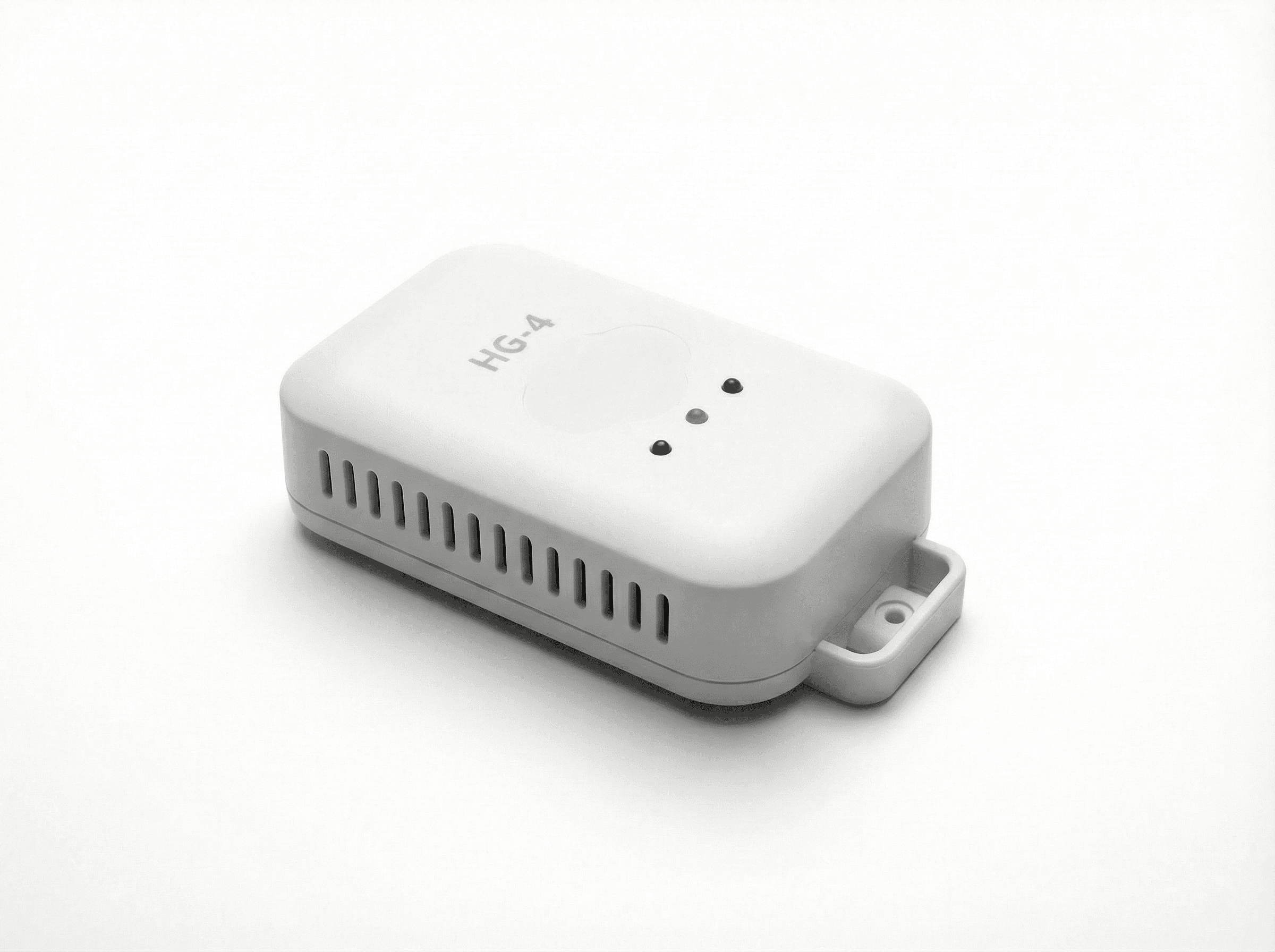
HG-4
All-in-one environmental sensor unit
Technical summary
Technical Summary
Scale
70-node high-density deployment.
Network
Hybrid Mesh / Wi-Fi / PoE.
Wi-Fi power
Battery-powered Wi-Fi models engineered to a 5-year service-life power budget at the target duty cycle.
Form factor
Ultra-compact industrial enclosure for vertical rack integration.
Data flow
Sub-second sampling with coherent cloud-sync.
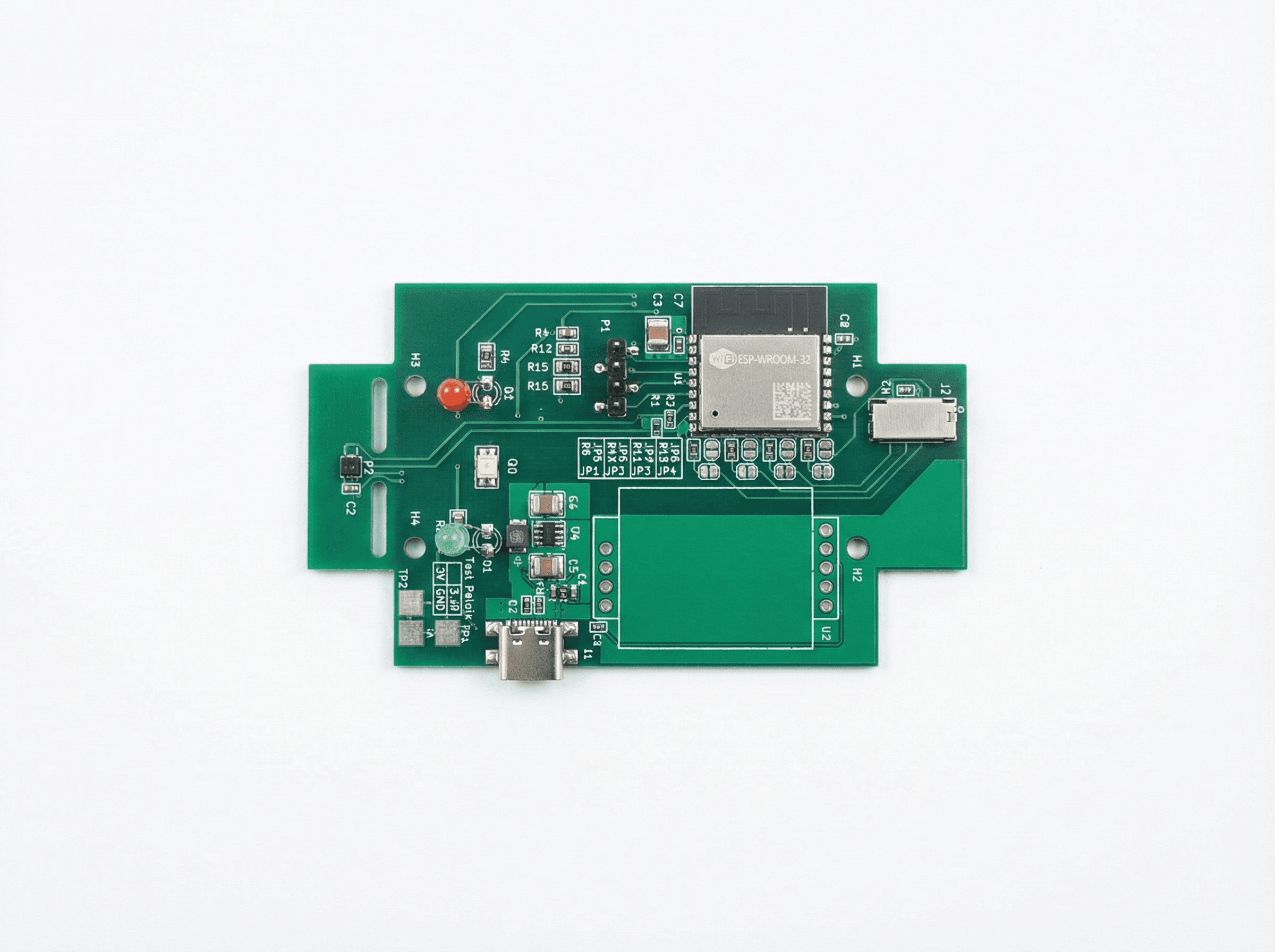
HG-4 electronics
PCB assembly
Next engagement
Designing dense sensor mesh for difficult RF environments?
WIRL integrates multi-parameter sensing, mesh and backhaul strategy, and provisioning automation under one licensed engineering team.