

Case Study: Hydroficient, Fast Product Delivery at Industrial Reliability
Product
Hydroficient: Industrial monitoring platform
From Prototype to Production: Engineered for Quality and Reliability
1. Engineering Recovery & Industrial Hardening
The mechanical platform is engineered for real industrial duty cycles, including corrosive and high-humidity mechanical-room installs. A "Design for Reality" approach produced a bespoke 304 stainless steel enclosure that withstands shipping, installation, and long-term field operation with consistent quality and reliability.
2. Resilient Electrical & PCB Architecture
A high-density, 6-layer custom PCB maintains signal integrity in electrically noisy field conditions and keeps connectivity dependable. Dual radios (Cellular LTE-M/NB-IoT and Wi-Fi) use autonomous path selection when a link degrades or drops, so telemetry remains continuous. Board partitioning and stackup choices isolate the high-resolution ADC from modem energy, preserving laboratory-grade sample quality in production hardware.
3. Mission-Critical Firmware (Target: 99.9% Uptime)
On-device software closes the loop for operations: bi-directional remote diagnostics and configuration without rolling a truck for every change. The "Zero-Touch" goal is enforced in firmware with multi-stage hardware and software watchdogs and advanced power-path management, so units self-recover from brownouts or hung states without on-site intervention. That operational discipline supports a 99.9% uptime target across installs.
4. Massive-Scale Cloud & Fleet Management
We architected a cloud-native backend designed to scale seamlessly from a single site to a global deployment. High Throughput: Engineered to ingest and process telemetry from 20,000+ concurrent devices at 1 kB/s telemetry rates. Fleet Operations: A unified dashboard with a secure Tenant Hierarchy (Manufacturer > Service Provider > End User) and encrypted Over-the-Air (OTA) firmware updates.
5. Precision Calibration: The Final 1%
To transform raw data into actionable insights, a professional custom calibration jig and automated software suite were built for production use. Validated Results: Every unit is factory-calibrated to a rigorous tolerance of ±0.5° temperature and ±0.5° angular accuracy. Automated QA: The system generates a digital "Certificate of Accuracy" for every device, providing a professional audit trail for the end-customer.
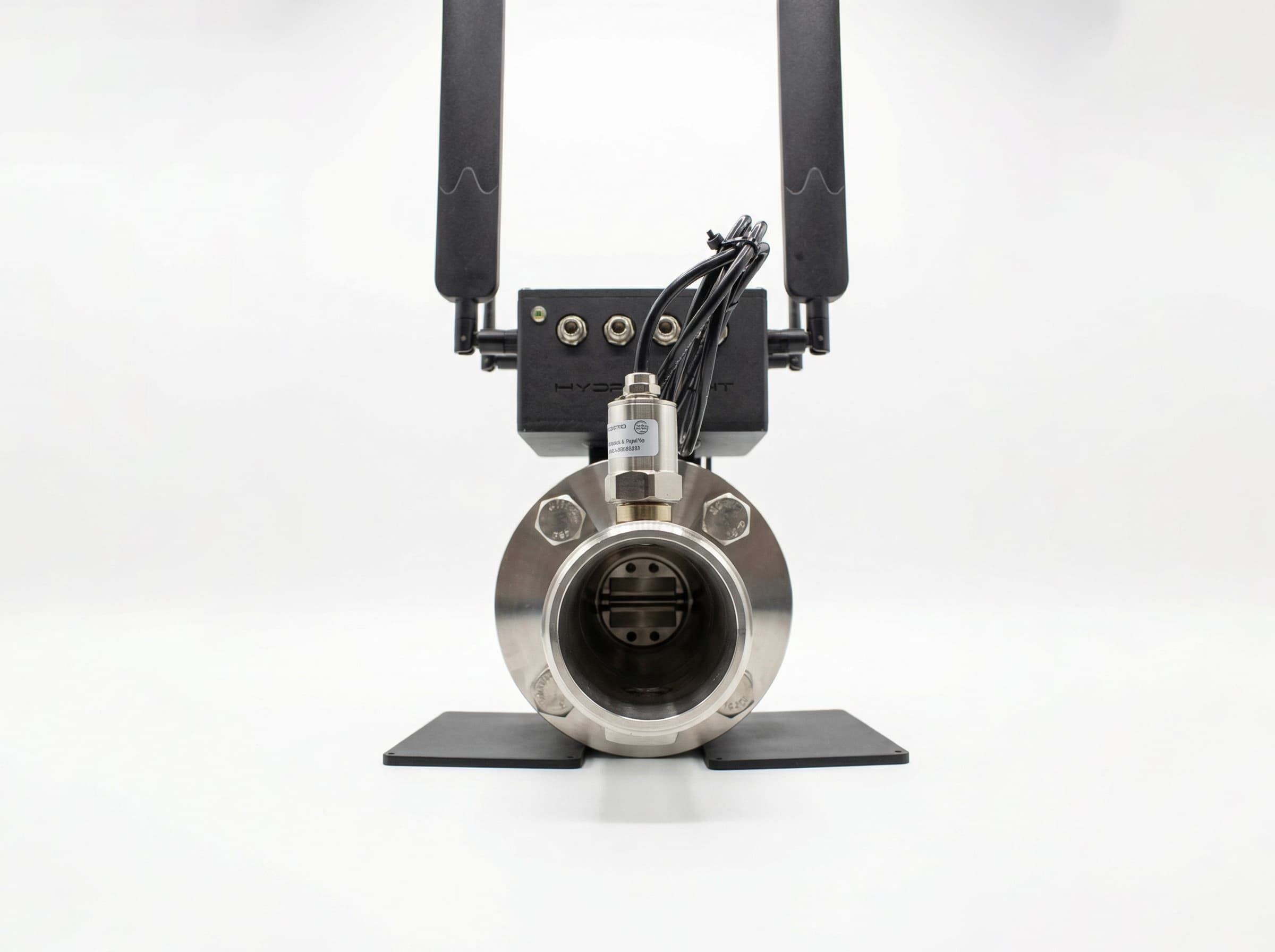
Industrial hardware
Alternate view of sensing path and valve integration
Technical summary
Technical Summary
Delivery efficiency
Shipped core product capabilities at 1/3 the expected delivery cost.
Hardware
Custom Multilayer PCB, 304 Stainless Steel.
Connectivity
RS485 (Modbus RTU), Cellular LTE-M, Wi-Fi, MQTT.
System precision
Guaranteed ±0.5 Degree Accuracy.
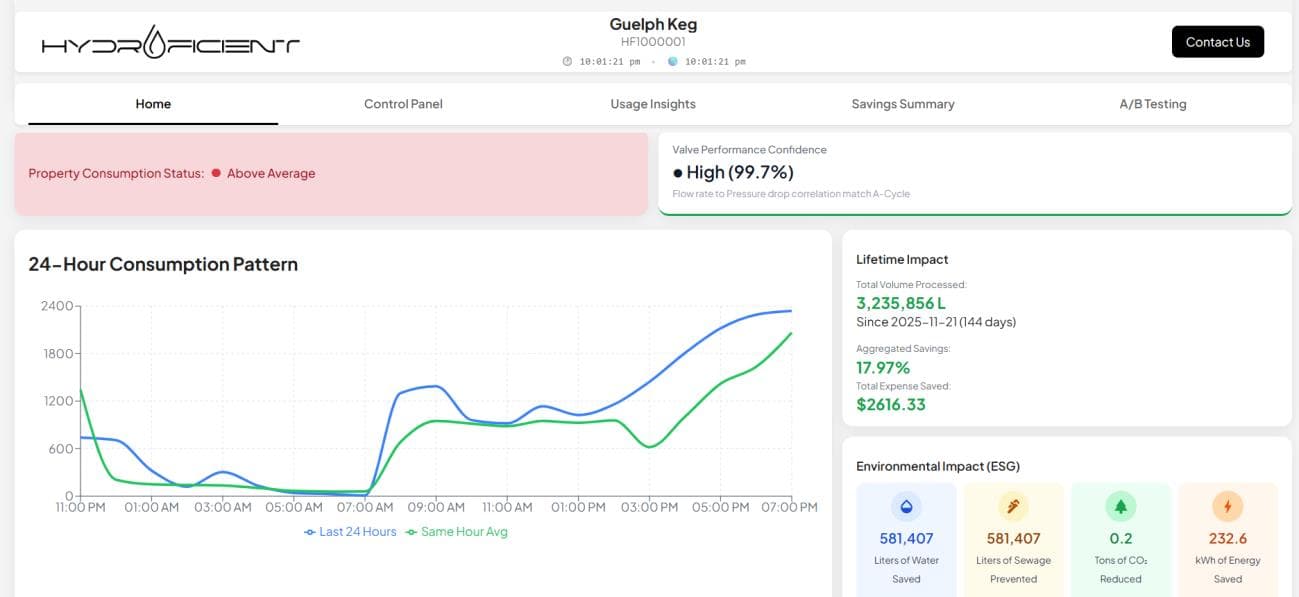
Operator dashboard
Fleet telemetry and technical specifications
Next engagement
Building a secure, scalable industrial IoT platform?
If you need to deliver quickly without compromising reliability, we align mechanics, PCB, firmware, and cloud backend under one licensed engineering team to ship secure systems that scale.